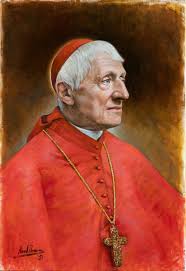
John Henry Newman will be declared a Doctor of the Church on November 1, 2025. He is renowned for work, An essay on the Development of Christian Doctrine. As relativism infiltrates the Church, it is increasingly difficult to discern the certainty of the fundamental Church teachings, particularly when our leaders issue confusing or ambiguous statements on matters of faith and morals. For instance, topics such as the death penalty, pro-life issues, same-sex blessings, women’s ordination, and synodality often spark debate. In their frustration, Catholic bloggers frequently cite Newman’s essay to challenge cardinals and bishops whose ideas and personal beliefs appear to conflict with Scriptures and the authentic Magisterial teachings of the Church.
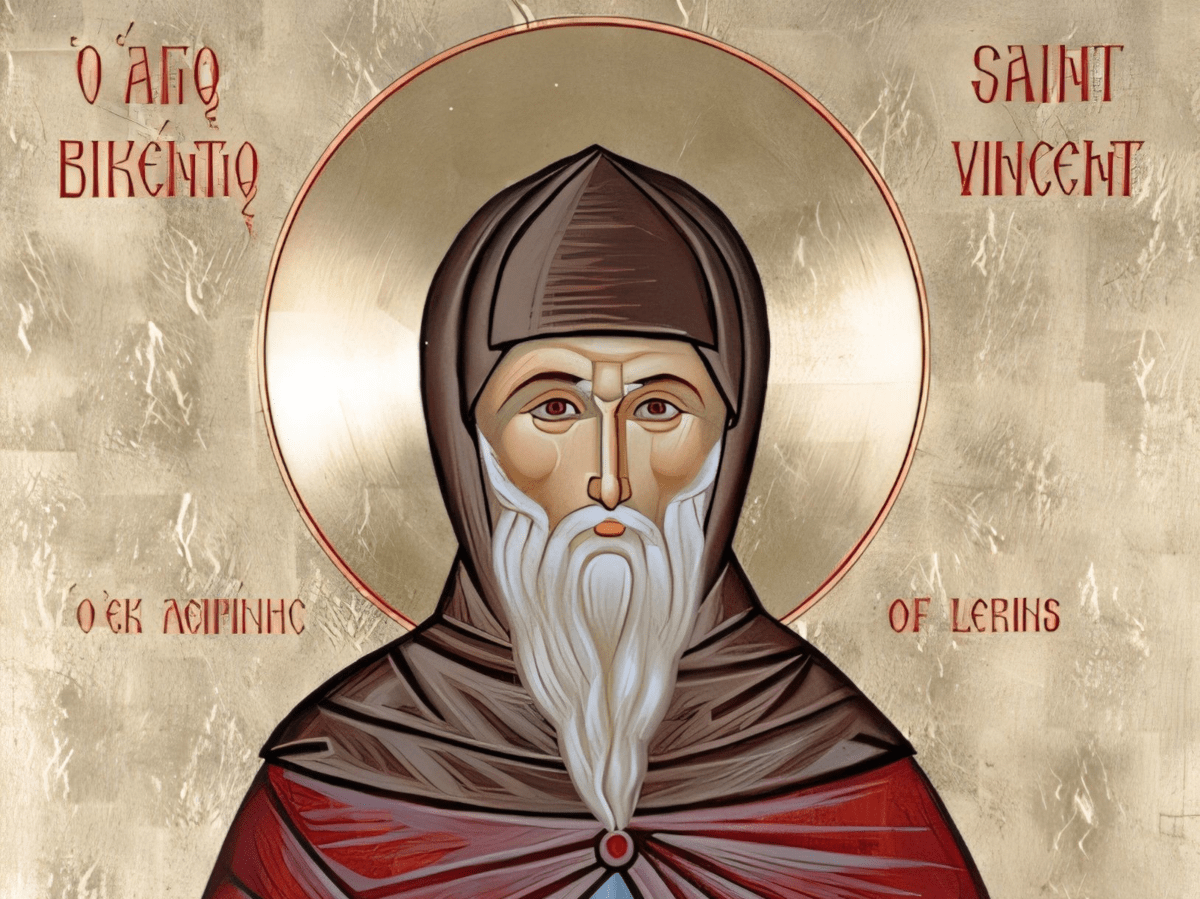
While praying the Office of Readings on Friday of the 27th Week of Ordinary Time, I was surprised to discover that a lesser-known saint from France who died in 445 AD had already provided a clear explanation and valuable guide on the proper development of doctrine.
Saint Vincent of Lerins writes:
“Is there to be no development of religion in the Church of Christ? Certainly, there is to be development and on the largest scale.
Who can be so grudging to men, so full of hate for God, as to try to prevent it? But it must truly be development of the faith, not alteration of the faith. Development means that each thing expands to be itself, while alteration means that a thing is changed from one thing into another.
The understanding, knowledge and wisdom of one and all, of individuals as well as of the whole Church, ought then to make great and vigorous progress with the passing of the ages and the centuries, but only along its own line of development, that is, with the same doctrine, the same meaning and the same import.
The religion of souls should follow the law of development of bodies. Though bodies develop and unfold their component parts with the passing of the years, they always remain what they were. There is a great difference between the flower of childhood and the maturity of age, but those who become old are the very same people who were once young. Though the condition and appearance of one and the same individual may change, it is one and the same nature, one and the same person.
The tiny members of unweaned children and the grown members of young men are still the same members. Men have the same number of limbs as children. Whatever develops at a later age was already present in seminal form; there is nothing new in old age that was not already latent in childhood.
There is no doubt, then, that the legitimate and correct rule of development, the established and wonderful order of growth, is this: in older people the fullness of years always brings to completion those members and forms that the wisdom of the Creator fashioned beforehand in their earlier years.
If, however, the human form were to turn into some shape that did not belong to its own nature, or ever if something were added to the sum of its members or subtracted from it, the whole body would necessarily perish or become grotesque or at least be enfeebled. In the same way, the doctrine of the Christian religion should properly follow these laws of development, that is, by becoming firmer over the years, more ample in the course of time, more exalted as it advances in age.
In ancient times our ancestors sowed the good seed in the harvest field of the Church. It would be very wrong and unfitting if we, their descendants, were to reap, not the genuine wheat of truth but the intrusive growth of error.
On the contrary, what is right and fitting is this: there should be no inconsistency between first and last, but we should reap true doctrine from the growth of true teaching, so that when, in the course of time, those first sowings yield an increase, it may flourish and be tended in our day also. “
It is easy then to determine whether the proposals of some theologians, priests, bishops or cardinals represent true developments of faith or mere alterations. No matter how articulate and fluent their explanations may be, one thing is certain: the truth is easy to recognise, and the truth will always prevail!

 Silere Non Possum!
Leave a comment